Case Study: NASA Upset Recovery Research
Client: NASA
Date: Spring 2009
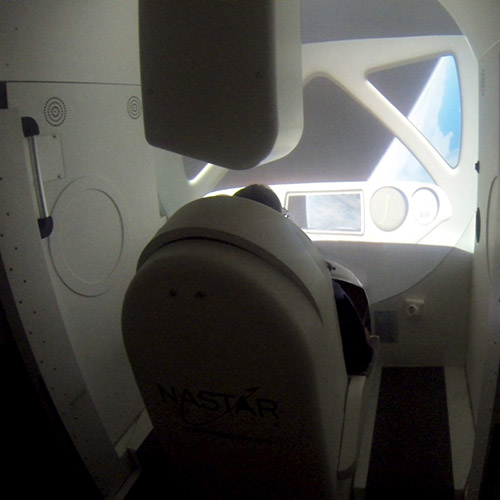
In September of 2006 ETC was approved for a research grant from NASA to further explore the use of sustained-g centrifuge based full motion simulators for use in URT. The project was separated into two main phases.
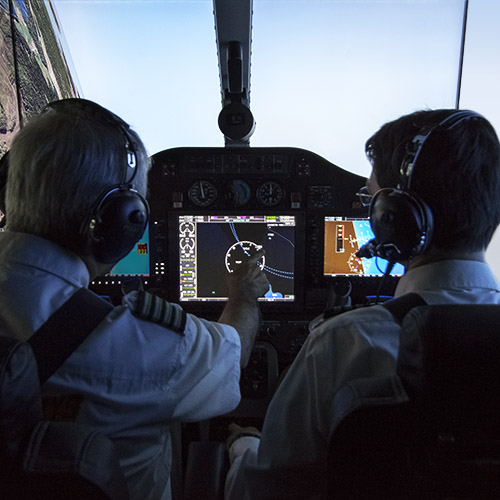
The first phase was an investigation into the physiological response of pilots to upsets. Twenty experienced airline pilots were subjected to a series of upsets in the GYROLAB GL-2000 configured as a large transport aircraft. During each recovery, several physiological measurements were taken to determine the critical physiological characteristics of upset recovery.
The second phase was an experiment to assess the benefit of URT using the GYROLAB GL-2000. Twenty more airline pilots visited the NASTAR Center and were given the full NASTAR Center URT course. This second group was evaluated both before and after the training in order to measure improvement during the course. The final report for this project is currently in progress, however, preliminary data shows a clear improvement in pilot performance as a result of NASTAR Center URT.
Getting to apply book knowledge for real. This is Awesome!
Derek E. Freeman,
757/767 Pilot
aerospace research at the nastar center
The NASTAR Center Aerospace Research Lab (NCRL) provides researchers easy access to The NASTAR Center's non-government, full-service facility and access to sophisticated aeromedical flight training equipment, engineering services, and operational staff to accommodate your aerospace research project requirements.
specializing in combined environments
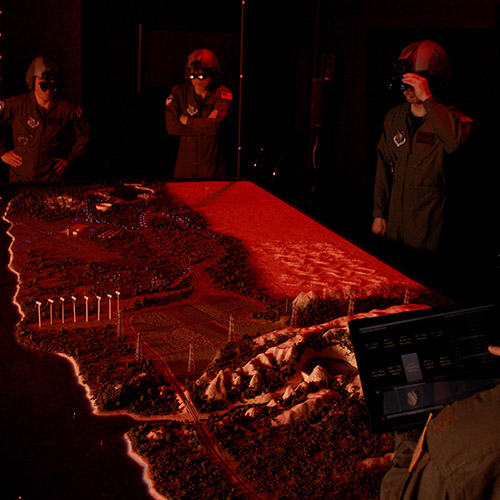
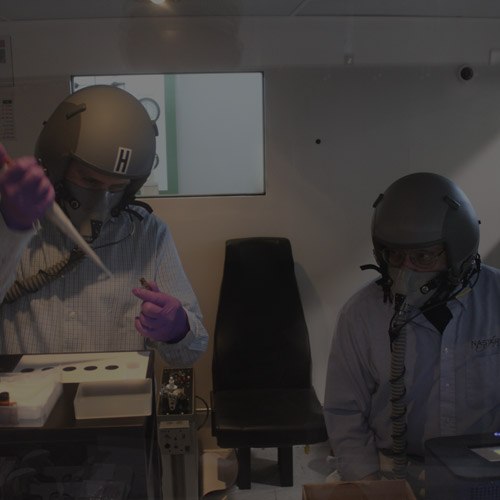
The NASTAR Center facility offers a complete range of aerospace Human Factors research and Component testing services. In addition, researchers are allowed access to NASTAR Center's Institutional Review Board (IRB), test subjects, test pilots, medical monitoring, IRCCTV Video Capability, high-fidelity cockpit modules, aersospace research modules, engineering, mechanical, and custom fabrication services.
The NASTAR Center Aerospace Research Lab Human Factors and Component Testing Capabilities Include:
- Acceleration (High-G Onset, Multi-Axes, Sustained G)
- Motion & Spatial Disorientation
- Altitude
- Pressure
- Vibration
- Shock
- Thermal
- Night Conditions
- Combined Environments (combined Vibration & acceleration, others upon request)
- Custom Fabrication Services & Flight Profile Modeling